★ 台灣美食悠遊網   ★ Taiwan Tour & Gourmet Guide
  • 首頁
    • ● 台灣旅遊 導覽網
    • ● 優活 健康網
    • ● 生活 智慧網
    • ● 消費者 網站 Consumers' Website
    • ● 台灣旅遊與美食指引- Taiwan Tour & Gourmet Guide
  • 菜系
    • ● 中國菜 八大菜系-1 魯菜- 山東- Shandon
    • ● 中國菜 八大菜系-2 川菜- 四川- Sichuan
    • ● 中國菜 八大菜系-3 粵菜- 廣東- Canton
    • ● 中國菜 八大菜系-4 蘇菜- 江蘇- Jiangsu
    • ● 中國菜 八大菜系-5 閩菜- 福建- Fujian
    • ● 中國菜 八大菜系-6 浙菜- 浙江- Zhejiang
    • ● 中國菜 八大菜系-7 湘菜- 湖南- Hunan
    • ● 中國菜 八大菜系-8 徽菜- 安徽- Anhui
    • ● 中國菜 母菜系 : 豫菜 - 河南- Henan
    • ● 中國菜 其他菜系 : 京菜- 北京- Peking
    • ● 中國菜 其他菜系 : 上海菜- Shanghai
    • ● 中國菜 其他菜系 : 客家菜- Hakka
    • ● 中國菜 其他菜系 : 潮州菜- Chaozhou
    • ● 中國菜 其他菜系 : 鄂菜 - 湖北- Hubei
    • ● 中國菜 其他菜系 : 贛菜 - 江西- Jiangxi
    • ● 中華料理- 滿漢全席 Man-Han Banquet
  • 美食
    • ● 中國菜 美食料理 - Chinese cuisine
    • ● 台灣菜 美食料理 - Taiwanese cuisine
    • ● 美國料理 美食- American Food
    • ● 義大利 美食- Italian Food
    • ● 法國料理 美食- French Food
    • ● 日本料理 美食- Japanese Food
    • ● 韓國料理 美食- Korean Food
    • ● 東南亞料理 美食- 燒烤 沙嗲 Satay
    • ● 東南亞各國美食- SE Asian Food
    • ● 泰國料理 美食 - Thai Food
    • ● 墨西哥料理美食- Mexican Food
    • ● 地中海料理 美食
  • 美食
    • ● 外國人最喜歡吃的十道中國菜- Top Ten
    • ● 香港美食100強 (1)- Hong Kong
    • ● 香港美食100強 (2)- Hong Kong
    • ● 中國菜 烹飪 介紹 - Chinese Cuisine Intro.
    • ● 中國菜美食 燒賣 - Shumai
    • ● 中華美食- 宮保雞丁-Gongao chicken
    • ● 美味營養的紅糟肉
    • ● 鰻魚、紅燒鰻 - Roasted Eel
    • ● 美味可口 蛋炒飯- Fried rice with egg
    • ● 美味可口 蔥油餅- Green Onion Pancake
  • 餐廳
    • ● 港式料理 餐廳 - Hong Kong Cuisine
    • ● 台灣式料理 餐廳 Taiwanese restaurants
    • ● 日本料理 餐廳 - Japanese Restaurants
    • ● 法國料理 餐廳 - French Restaurants
    • ● 吃到飽餐廳 - All You Can Eat.
    • ● 主題餐廳 - Theme Restaurants
    • ● 明星的餐店 -
    • ● 飯店餐廳設計與經營
  • 旅遊
    • ● 2012 台灣旅遊展 Travel Show 2012
    • ● 台灣旅遊 - Taiwan Tour & Travel
    • ● 台北旅遊 - Taipei Tour & Travel
    • ● 如何購買 便宜的國際機票 - Airline tickets
    • ● 美國旅遊業 競相收費 -
    • ● 台灣 環島旅遊 (Taiwan Tour)
  • 飯店
    • ● 台北市旅館 歷年優良名單
    • ● 台北市 著名 飯店旅館
    • ● 台北市 著名 飯店餐館
    • ● 台中市 著名飯店餐館
  • 小吃
    • ● 台灣小吃 美食 - 中英文對照
    • ● 台灣小吃 油炸美食 Fried Food
    • ● 台灣小吃蚵仔煎 Oyster omelet
    • ● 台灣 甜食小吃 介紹
    • ● CNN 不可缺的40種台灣美食-1
    • ● CNN 不可缺的40種台灣美食-2
    • ● CNN 不可缺的40種台灣美食-3
    • ● CNN 不可缺的40種台灣美食-4
  • 夜市
    • ● 台北市 觀光夜市 - 台北美食
    • ● 台北市 士林區 士林觀光夜市
    • ● 台北市 萬華區 華西街 觀光夜市
    • ● 台北市 松山區 饒河街 觀光夜市
    • ● 台北市 大同區 寧夏 觀光夜市
    • ● 台北市 大同區 延三夜市
    • ● 台北市 大安區 臨江街 觀光夜市
    • ● 台北市 大安區 永康街夜市
    • ● 台北市 大安區 師大夜市
    • ● 台北市 公館夜市
    • ● 台北市 南昌路夜市/ 南機場夜市
    • ● 台北市 遼寧街,雙城街夜市
    • ● 台北市 文山區 景美夜市
    • ● 台北市 內湖區 737夜市
    • ● Brave Taiwanese. They dare to eat anything of Street Food Vendors.
  • 夜市
    • ● 基隆市 廟口觀光夜市- Keelung N Market
    • ● 新北市 觀光夜市-New Taipei City N.M.
    • ● 桃園縣市 觀光夜市
    • ● 台中市 逢甲 觀光夜市
    • ● 新竹縣市 觀光夜市
    • ● 彰化縣 觀光夜市
    • ● 宜蘭縣 羅東夜市、東門夜市
    • ● 台東縣市 觀光夜市
    • ● 花蓮縣 南濱 觀光夜市
    • ● 雲林縣 觀光夜市
    • ● 嘉義縣市 觀光夜市
    • ● 台南市 觀光夜市 / 花園夜市
    • ● 高雄市 六合 觀光夜市
    • ● 高雄市 瑞豐 觀光夜市
    • ● 屏東縣市 觀光夜市
  • 飲料
    • ● 咖啡對人體的效用 - Coffee
    • ● 台灣啤酒、米酒、葡萄酒 - Taiwan Beer
    • ● 牛奶、優酪乳- Milk, Yogurt
    • ● 葡萄酒 - Grape Wine
    • 美味良效的咖啡 - Coffee
    • 葡萄酒 介紹 - Grape Wine
    • 果汁 飲料 - Fruit Juice
  • 餐飲
    • ● 用品牌打造餐飲王國- 王品
    • ● 餐館飲食 消費者指南
    • ● 橄欖油 - Olive Oil
    • ● 麵包店不敢告訴你的事 - Bread
    • ● 奶香粉,蛋香劑- 色香味俱全麵包的幕後功臣
  • 健康
    • ● 揭開 10大危險小吃的真相
    • ● 當心美食會危害你的健康
    • ● 飲食健康 小道消息
    • ● 美食與豬油 - 面對健康議題 Lard & Health
    • ● 美食 與 膽固醇的關係 -
    • ● 反式脂肪酸有害健康 - Trans Fat
    • ● 小吃美食 與 健康的關係
    • ● 國人10大死因 心血管疾病佔3成
    • ● 身體有好菌 預防糖尿病
    • ● 天天吃炸雞,少女狂掉髮停經1年半
    • ● 氯黴素 - 超過3成含禁藥! 貢丸吃多恐致癌
    • ● 啤酒配炸雞,胃癌找上門
  • 景點
    • ● 新北市 瑞芳區 九份、金瓜石
    • ● 台北市 木柵 貓空纜車- MaoKong Gondola
    • ● 台北市 木柵 動物園 - Taipei Zoo
    • ● 台北市 運動比賽場所
    • ● 台灣 生物園區、遊樂中心
  • 新聞
    • ● 民調 : 最愛逢甲夜市, 最不滿意環境清潔
    • ● 飼料有毒, 逾2萬隻雞拒吃餓死
    • ● 茂利毒澱粉 疑流入台灣小吃、夜市
  • 陸客
    • ● 陸客 台灣旅遊行程
    • ● 陸客 瘋台灣旅遊 - 新聞
    • ● 陸客最愛的台灣美食 - Favorite Food
    • ● 台灣鳳梨酥成為陸客最愛伴手禮
    • ● 陸客最愛台灣景點是台灣的人情味 -
    • ● 反對購物佣金補團 台灣導遊揚言罷工抗議
    • ● 陸客來台自由行 每日限額人數逐年增加
  • 購物
    • ● 台灣餐飲購物,商家利潤有多少?
    • ● 台灣 購物中心 列表
    • ● 2012台灣百貨公司週年慶時間
  • 人物
    • ● 永遠的軍中情人 鄧麗君 - Teresa Teng
    • ● 台灣名廚 阿基師 - (鄭衍基)
  • 留言
    • 留言版 1
    • ● 聯絡
    • ● 輕鬆一下
  • 音樂
    • ● 音樂 A - Oldies (Misc Songs)
    • ● 音樂 B - Morning Has Broken
    • ● 音樂 C - Something Worth L B
    • ● 音樂 D - Mary C. Carpenter
    • ● 音樂 E - Misc Singers / Songs
  • 連接
    • ● 台灣 旅遊網
    • ● 優活 健康網
    • ● 生活 智慧網
    • ● 消費者 網站
    • ★ 大陸 旅遊網
    • ● 台灣客 資訊網
    • ★ 財富 事業網
    • ★ 知識 技術網
    • ● 快樂果 旅遊網- Caolgo Tour & Travel
    • ★ 浙江省 宁波市- 我家面包店- My Home
    • ● 自行車 網站 (1) Bicycle Website-1
    • ● 英文學習教學網 -(1)
Picture

現在位置:美食 > 外國人最喜歡吃的十道中國菜 - Top Ten Delicious Chinese Cuisines

外國人最喜歡吃的十道中國菜:
(1) 糖醋里脊 (Sweet and Sour Pork)
(2) 宮保雞丁 (Gong Bao Chicken)
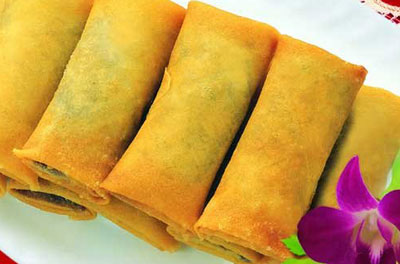
(3) 春捲 (Spring Rolls / Egg Rolls)
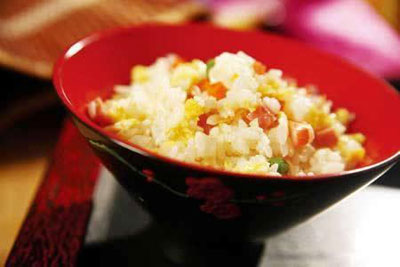
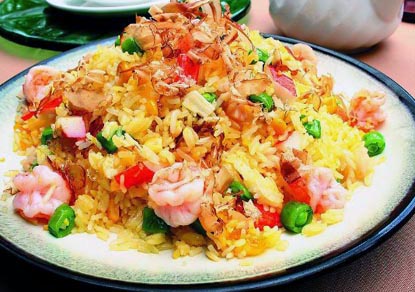
(4) 炒飯 (Fried Rice with Egg)
(5) 麻婆豆腐 (Ma Po Bean Curd)
(6) 餃子 (Jiaozi, Chinese Dumplings)
(7) 餛飩 (Wonton Soup)
(8) 烤鴨 (Peking Duck)
(9) 炒麵 (Chow Mein)
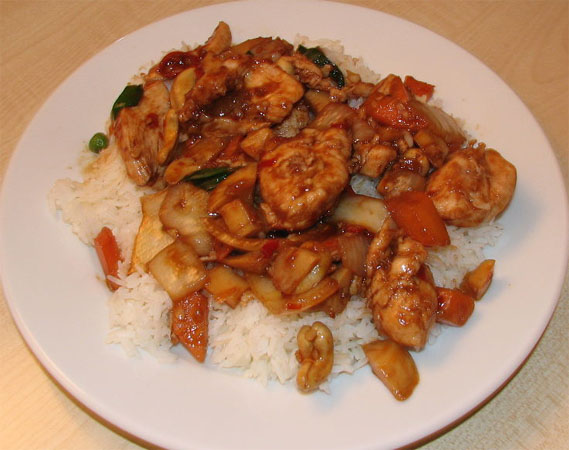
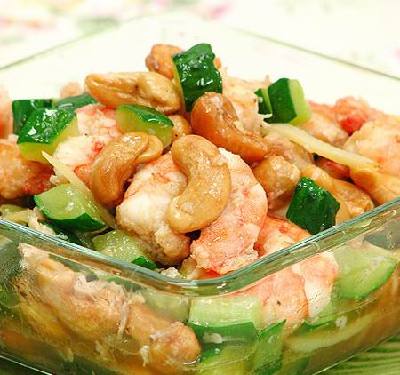
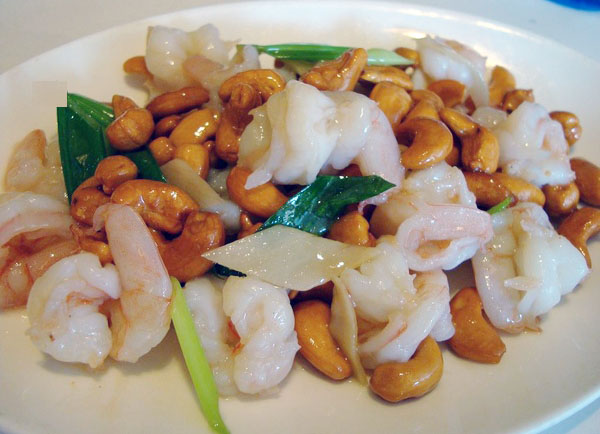
(10) 腰果蝦仁 (Fried Shrimps with Cashewnuts)
Picture

第一道菜:糖醋里脊
(No.1 Sweet and Sour Pork)

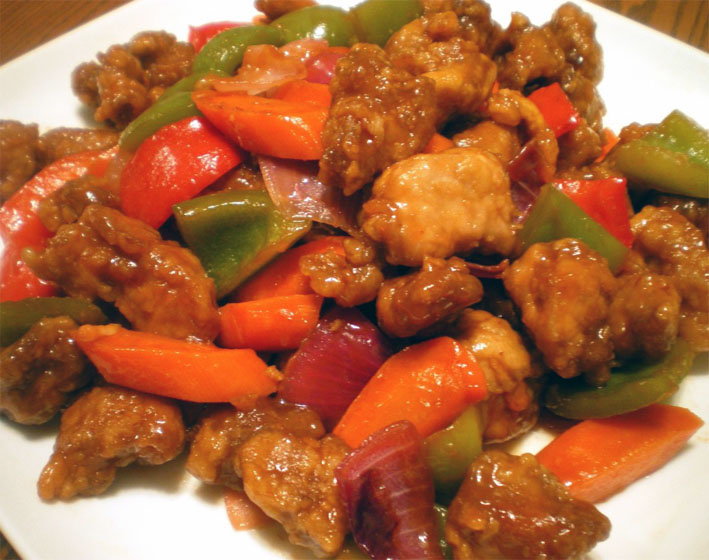
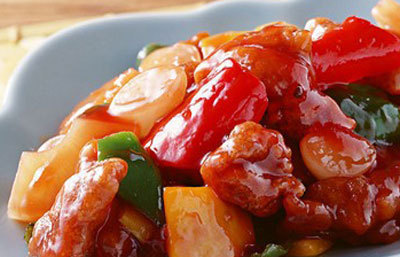
     糖醋里脊,在浙江菜,四川菜,清真菜,鲁菜中都有此菜。糖醋汁淋到里脊上,一口咬下去,焦脆的外皮,裹著鮮嫩的豬肉,酸甜混合的味道,真是美味。
食材與作法
主料:里脊肉250克,食用油500克(實耗50克)
輔料:雞蛋1個,香蔥1棵,生薑1小塊,麵粉,澱粉適量。
調料:香油1小匙,高湯1/2大匙,料酒1/2大匙,香醋2大匙,白糖2大匙,精鹽1小匙, 
烹飪方法:1. 雞蛋打入碗內, 2. 肉洗淨切片,放入雞蛋液中,加水澱粉、麵粉抓勻,3. 蔥、姜洗淨切末, 4. 碗內放料酒、糖、香醋、鹽、蔥、姜、澱粉、高湯兌成芡汁, 5. 鍋內放油,燒至五成熱,下入肉片,炸至焦脆,撈出瀝油, 
6. 鍋內留底油,烹入芡汁,倒入肉片,炒勻,淋香油即可。
 
   Sweet and sour pork is a Chinese dish that is particularly popular in Cantonese cuisine and may be found all over the world. A traditional Jiangsu dish called Pork in a sugar and vinegar sauce (糖醋里脊) is considered its ancestor.
   The dish consists of deep fried pork in bite sized pieces, and subsequently stir-fried in a more customized version of sweet and sour sauce made of sugar, ketchup, white vinegar, and soy sauce. Additional ingredients may include pineapple, green pepper (capsicum), and onion. In more elaborate preparations, the dish's tartness is controlled by requiring that Chinese white rice vinegar be used sparingly and using ketchups with less vinegary tastes, while some restaurants use unripe kiwifruits and HP sauce in place of vinegar. Some of the more casual food outlets use diluted acetic acid as a substitute for white vinegar and synthesized red colouring in place of ketchup to keep the costs down, making the dish too pungent and leaving customers thirsty.
      Sweet and Sour Pork consists of pork sliced into serving pieces, marinated, dredged in flour and/or cornstarch, and deep-fried. It is prepared American-style with more batter and deep-fried twice for extra crispiness. The sweet and sour sauce are made from brown sugar, rice vinegar, and ketchup. Vegetables such as bell pepper, carrots, and red onions are also used to add flavor.
Picture
▲▼ 糖醋里脊(Sweet and Sour Pork)
Picture
主廚教你做.糖醋里肌 - 阿基師

第二道菜:宮保雞丁
(No. 2 Gong Bao Chicken)

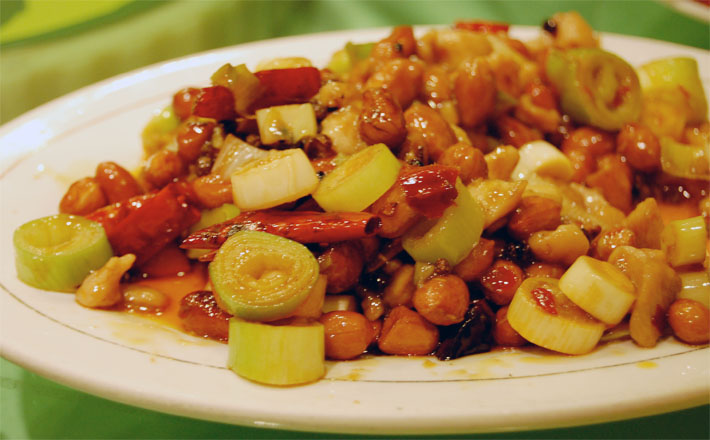
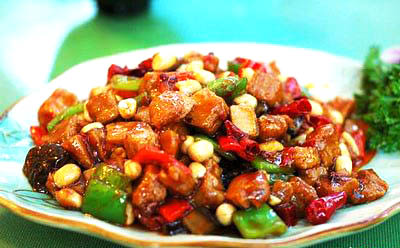
        宮保雞丁,黔菜傳統名菜,由雞丁、乾辣椒、花生米等炒製而成。由於其入口鮮辣,雞肉的鮮嫩配合花生的香脆,廣受大眾歡迎。尤其在英美等西方國家,宮保雞丁“氾濫成災”,雞肉是各國人民都普遍接受的肉類,配料花生不光是中國人也是老外的下酒好菜,去老外家裡做客,總會看到桌子上的零食區裡擺滿花生讓大家自取食用。
烹調作法
      宮保雞丁的主料是雞肉,輔料為花生、黃瓜、蔥段以及香辛料。由於流傳範圍較廣,各地做法不盡相同,以下僅為參考。雞肉切丁並抓勻碼味後,加粉碼芡。花椒和辣椒入油炸香後,下雞丁炒散,再加豆瓣醬等調料及輔料,最後待鍋中汁沸加入炸好的花生米,掂勺起鍋。

   Kung Pao chicken, also as Gong Bao chicken (宫保鸡丁), is a spicy stir-fry dish made with chicken, peanuts, vegetables, and chili peppers. The dish is popular both within China and in westernized Chinese cuisine in North America. This classic Szechuan cuisine, originating in the Sichuan Province of central-western China also includes Sichuan peppercorns. The dish is believed to be named after Ding Baozhen, a late Qing Dynasty official, a one-time governor of Sichuan. His title was Gong Bao (Chinese: 宫保). The name "Kung Pao" chicken is derived from this title. This stir-fried spicy dish hails from Sichuan Province and incorporates diced chicken and vegetables with peanuts and hot chili peppers. 
        The original Sichuan version uses chicken as its primary ingredient. In this original version, diced chicken is typically mixed with a prepared marinade. The wok is seasoned and then chili peppers and Sichuan peppercorns are flash fried to add fragrance to the oil. Then the chicken is stir fried and vegetables, along with peanuts, are added. Shaoxing wine is used to enhance flavor in the marinade.
            Kung Pao chicken starts off with fresh, moist, unroasted peanuts or cashew nuts. These are often used instead of their pre-roasted versions. The peanuts or cashew nuts are dropped into the hot oil on the bottom of the wok first, then deep fried until golden brown before the other ingredients are added.
         In Sichuan, or when preparing authentic Kung Pao chicken only Sichuan-style chili peppers are used. The most important component of the dish is handfuls of Sichuan peppercorns. It is these peppercorns that give authentic Kung Pao chicken its distinctive numbing flavor.
        Westernised versions of Kung Pao chicken commonly consist of diced marinated chicken stir-fried with skinless unsalted roasted peanuts; chopped, sliced, or diced red bell peppers (as well as other vegetables such as green bell peppers, celery, Chinese cabbage, water chestnuts, and carrots); sherry or rice wine; hoisin sauce; oyster sauce; and chili peppers. Although chicken is traditionally used, seafood items such as shrimp or scallops, or other meats such as beef or pork, are sometimes used in place of the chicken. It can also be prepared with tofu instead of meat.
Picture
宮保雞丁 (Kung pao Shanghai)
Picture
宮保雞丁 (Gong Bao Chicken)
Picture
西式宮保雞丁 Westernized version of Kung Pao chicken.

第三道菜:春捲
(No.3 Spring Rolls / Egg Rolls)

      春捲是中國民間流行的傳統小吃,用薄麵皮,捲上餡料,經油炸的食品。各地的餡料和大小不同,但基本是扁圓筒狀。以中國為例,一般人多用蔬菜及肉作餡料,而北方部分地區則會改用紅豆沙。中國的春捲一般很小,一直徑20厘米的碟可以裝十多個。美國華人飯店做的春捲有肉餡,很大一個,一個春捲可以當一頓飯,類似於漢堡。春捲亦是滿漢全席中第二席的一道菜式。
       在中國內地,於立春當天,人們用餅皮包裹生菜,做成春餅或春卷,大家分食,祈求身體健康,稱之為「咬春」,逐漸變成日常食物。
         在北美洲和部份歐洲的中餐
館,「春捲」一詞專指素春捲,而肉餡春捲被稱為蛋捲 (Egg Roll)。雖然各家餐廳的春捲形制不同,一般來說同一家餐廳的蛋捲要大於春捲。蛋捲使用較厚的麵皮,內陷以豬絞肉為主,摻雜蔬菜、蝦肉、粉絲等普通春捲材料。下油鍋前,蛋捲外刷蛋漿,炸後呈現凹凸不平的外皮。和春捲一樣,蛋捲佐紅色酸甜醬或杏醬進食。
         春捲被外國朋友選出來是在情理之中,從中不難看出中國點心尤其是廣式小吃在外國人心中的影響力。對於春捲,老外們在西方國家肯定很少見到,新奇的形狀加上酥脆的口感,讓他們樂在其中。 
        Spring rolls are a large variety of filled, rolled appetizers. The name is a literal translation of the Chinese chūn juǎn (春捲) found in East Asian and Southeast Asian cuisine. The kind of wrapper, fillings, and cooking technique used, as well as the name, vary considerably within this large area. These traditional wraps come either deep fried or fresh wrapped in rice noodle and filled with vegetables and meat.
Picture
春捲 (Spring Rolls)
Picture
春卷 Spring Rolls

第四道菜:炒飯
(No.4 Fried Rice with Egg)

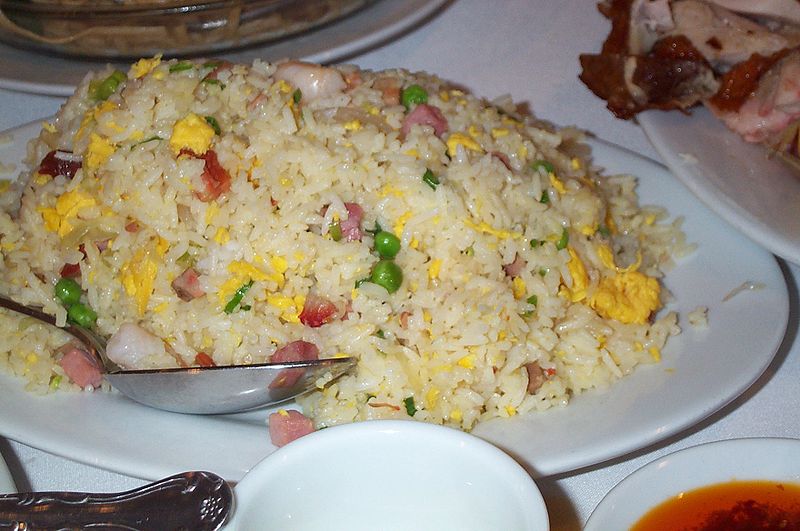
  炒飯泛指以炒的方式製成的米飯料理,狹義上專指以雞蛋炒成的飯,即蛋炒飯。炒飯是起源於中國的一種食品。炒飯相傳源自中國隋朝越國公楊素愛吃的碎金飯,即是蛋炒飯。其後經過超過一千年發展,中國不少地區均發展出不同種類的炒飯。其中以揚州炒飯最為著名。揚州市是中國江蘇省下轄的一個地級市。廣州和揚州都有自己版本的揚州炒飯,但以前者較為普及。2004年底,廣州式的揚州炒飯被列入聯合國全球300種米飯食譜之中。
     相傳在一次國事訪問中,李鴻章叫他的廚師做一道中國人喜歡吃、洋人也喜歡吃的菜餚。聰明的廚師直奔廚房,挽起袖子便做了款炒飯。這款美食得到了各國外交官們的稱讚,而李中堂也風光不少。
        近年來在台灣口語中,炒飯亦指做愛,此衍生義來源眾說紛紜。此義源自成語生米煮成熟飯或「生米炒成熟飯」,詞語重構成炒飯。另有一說,指炒飯的意象對應翻雲覆雨,男為鍋鏟女為鍋,一根鍋鏟在鍋子裡炒呀炒的,故以之代稱做愛。
        Fried rice is a popular component of Asian cuisine, especially Chinese food and Southeast Asian foods. It is made from steamed rice stir-fried in a wok, often with other ingredients, such as eggs, vegetables, and meat. It is sometimes served as the penultimate dish in Chinese banquets (just before dessert). As a home-cooked dish, fried rice typically is made with leftover ingredients from other dishes, leading to countless variations.
         The many popular varieties of fried rice have their own specific list of ingredients. In Asia, the more famous varieties include Yangzhou (揚州) and Fujian fried rice. Elsewhere, Chinese restaurants catering to non-Chinese clientele have invented their own varieties of fried rice including egg fried rice, Malaysian (spicy) fried rice.
       Fried rice is a common staple in American Chinese cuisine, especially in the form sold as fast food. The most common form of American Chinese fried rice consists of some mixture of eggs, scallions, and vegetables, with chopped meat added at the customer's discretion, and usually flavored with soy sauce instead of table salt. Fried rice made in American Chinese restaurants can vary in appearance, from a dark brown appearance often seen in East Coast establishments, to a light brown appearance often seen in Midwestern American Chinese restaurants. Fried rice is also seen in other American restaurants, even in cuisines with no native tradition of the dish. 
Picture
炒飯 (Fried rice with egg)
Picture
蛋炒飯 (Fried rice with egg)
Picture
廣州式的揚州炒飯 (Chinese fried rice)
阿基師 蝦仁蛋炒飯 紫菜蛋花湯

2012-12-03


第五道菜:麻婆豆腐
(No.5 Ma Po Bean Curd)

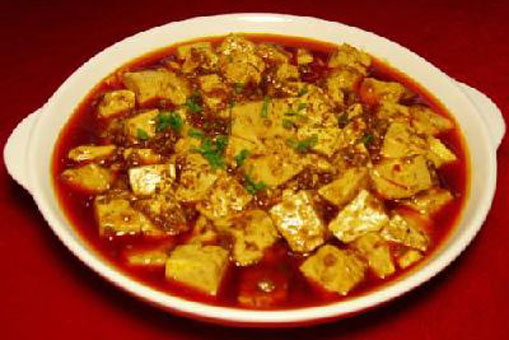
      麻婆豆腐是中國菜中的川菜的代表名作。材料主要有豆腐、牛肉碎 (也可用豬肉)、辣椒和花椒等。麻來自花椒,辣來自辣椒,這道菜突出了川菜「麻辣」的特點。此菜大約在清同治初年 (1874年後),由成都市北郊萬福橋一家名為「陳興盛飯舖」的小飯店老闆娘陳劉氏所創。因為陳劉氏臉上有麻點,人稱陳麻婆,她發明的燒豆腐就被稱為「陳麻婆豆腐」,後來因為這道菜大受歡迎,食客多不知其原始店名,而稱之為「陳麻婆豆腐店」。
         麻婆豆腐廣受歡迎,流傳各地,做法也有許多不同。最大的改變之一,是陳興盛飯鋪自己所調整,亦即將材料的牛肉改為豬肉,以便不吃牛肉的食客也能品嘗,但若干老食客對此改變評價不一。該店後來又改回專用牛肉,但以豬肉為料的作法也已廣為各地廚師和食客接受。其次則是增加了豆瓣醬,乃至於公認以郫縣豆瓣最佳。當代麻婆豆腐講究麻、辣、鮮、燙、嫩、捆(豆腐完整不爛)、酥(牛肉末酥香)等特色。
        台灣在1960年代製作此菜時,油必用花生油,肉則不拘牛豬。肉炒熟後,加入豆瓣醬、豆豉、紅椒粉、醬油、鹽、糖,爆香後再加入豆腐片、高湯,滾煮後加入蔥、薑、蒜,以水調太白粉勾芡,起鍋前加花椒粉和麻油。作料與程序已有若干變化,強調麻、辣、燙、鹹。
       可能沒有哪個菜系能像四川菜那樣把辣用到極致。川菜目前的地位也就因為一個辣字。西餐自然沒有辦法超越,老外只有邊吃邊讚歎的份兒。
Mapo doufu, or mapo tofu, is a popular Chinese dish from the Sichuan (Szechuan) province, and probably among the best known Chinese dishes in western world. It is a combination of tofu (bean curd) set in a spicy chili- and bean-based sauce, typically a thin, oily, and bright red suspension, and often cooked with fermented black beans and minced meat, usually pork or beef. Variations exist with other ingredients such as water chestnuts, onions, other vegetables, or wood ear fungus.
Picture
麻婆豆腐 (Ma Po Bean Curd)
Picture
麻婆豆腐 (Mapo Tofu featuring "Sichuan pepper") by 阿基師

第六道菜:餃子
(No.6 Jiaozi / Chinese Dumplings)

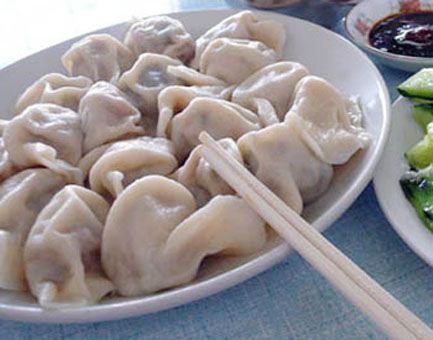
      餃子是以麵為皮的充餡食物,是中國北方傳統的食物,一些地方稱為扁食。常見的有水餃、蒸餃、煎餃。中國北方人過春節,絕不能少了餃子。大年除夕包餃子,午夜十二點開始吃,以諧音取「更歲交子」意思。農曆正月十五的餃子也叫團圓餃子,因為這一天是農曆新年後第一個滿月。此外還有「冬至餃子夏至麵」的說法,中國北方很多地方都有冬至吃餃子的習慣。中國南方地區也普遍有餃子這食品。但與北方相比最大的不同,就是餃子在南方地區有可能做成米粉皮。而且餃子在南方地區只是一種普通食品,很少出現在逢年過節的餐桌,與北方餃子的地位截然不同。
煎餃:當餃子包的太多而一次吃不完,留著下餐再吃的時候,可以改用煎的方式,味亦甚佳。習慣上人們會用食用油把餃子煎熱。近年飲食崇尚健康,多油食物不受歡迎。用水來煎餃子,口味也很好。煎餃也稱為鍋貼。
蒸餃:包餃子的皮較薄,可放到蒸籠中用大火蒸熟。
中國有一句話:好吃不過餃子。足見餃子在中餐的分量。而且餃子餡料的變化眾多,囊括中國文化精華,自然也是外國人眼中最能代表中國的一道菜。其實鍋貼在國外也很受歡迎,其中道理應和餃子有很大關係。
● 餃子在日本是最有名的中國料理之一。以燒餃子 (煎餃)為主,水餃比較少。 在餡裡有豬肉,大蒜,白菜。一般加點醬油、醋和辣油吃。
● 餃子在韓國語被稱作饅頭 (만두 mandu),以牛肉為餡,並特別喜歡在牛肉餡加上大量的辣椒,包的餃子是半月形站著,中國部分地區 (如東北和四川) 亦使用此半月形餃子的包法。
The jiaozi (餃子) is a common Chinese dumpling which generally consists of minced meat and finely chopped vegetables wrapped into a thin and elastic piece of dough skin. Popular meat fillings include ground pork, ground beef, chicken, shrimp, and even fish. Popular mixtures include pork with Chinese cabbage, pork with garlic chives, pork and shrimp with vegetables, pork with spring onion, garlic chives with scrambled eggs. Filling mixtures vary depending on personal tastes and region. Jiaozi are usually boiled or steamed and remains to be a traditional dish eaten on Chinese New Year's Eve, and special family reunions, or eaten for farewell to family members or friends. In Northern China, jiaozi are commonly eaten with a dipping sauce made of vinegar, chilli oil or paste, or soy sauce added.
Chinese dumplings (jiaozi) may be divided into three types depending on how they are cooked:
● Boiled dumplings: "water dumpling" (水餃 shuǐjiǎo).
● Pan fried dumplings: (鍋貼 guotie) literally "pan stick", known as "potstickers" in N. America, also referred to as "dry-fried dumplings" (煎餃 jiānjiǎo).
● Steamed dumplings: (zhengjiao) literally "steam dumpling" (蒸餃 zhēngjiǎo).
Picture
Picture
餃子 (Chinese Dumplings)

第七道菜:餛飩
(No.7 Wonton Soup)

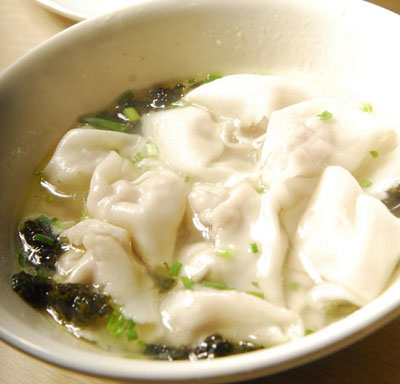
       餛飩是中國的傳統食品,部分種類的餛飩在廣東也稱為雲吞,巴蜀稱為抄手,閩臺稱為扁食。餛飩雖起源於華北,南方餛飩已經有獨立的風格,北方餛飩與餃子無異。古代中國人認為這是一種密封的包子,稱為「渾沌」,依據中國造字規則,後來才稱為「餛飩」。在這時候,餛飩與餃子並無區別。千百年來餃子並無明顯改變,但餛飩卻在南方發揚光大,形成獨立的風格。至唐朝開始,正式區分餛飩與餃子的稱呼。
       雖然好多人覺得餛飩和餃子有點像,但其實餛飩是餅的一種,差別為其中夾內餡,經蒸煮後食用;若以湯水煮熟,則稱“湯餅”。西餐的麵食中絕對沒有那麼細緻和清爽的做法!
    A wonton (also spelled wantan, wanton) is a type of dumpling commonly found in a number of Chinese cuisines. Wontons are made by spreading a square wrapper (a dough skin made of flour, egg, water, and salt) flat in the palm of one's hand, placing a small amount meat filling in the center, and sealing the wonton into the desired shape by compressing the wrapper's edges together.   Adhesion may be improved by moistening the wrapper's inner edges, typically by dipping a finger into water and running it across the dry dough.  Commonly used filling is ground pork with a small amount of flour added as a binder. The mixture is seasoned with salt, spices, and often garlic or finely chopped green onion. 
Picture

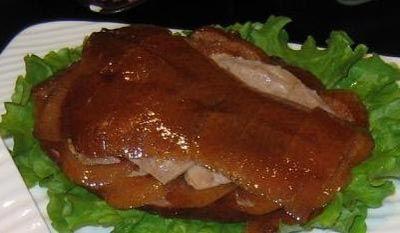
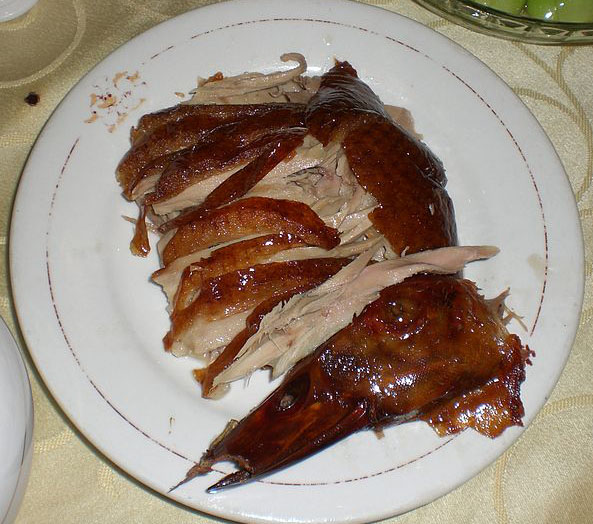
第八道菜:烤鴨
(No.8 Peking Duck)

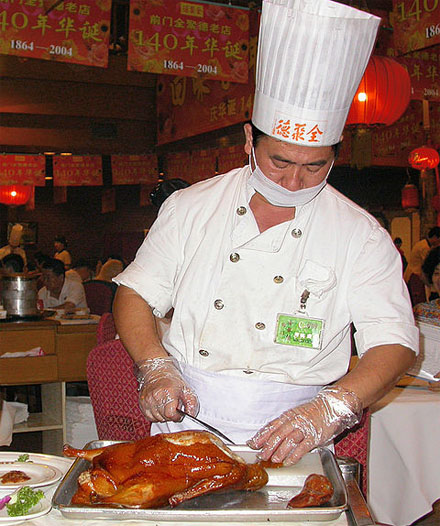
      北京烤鴨是具有世界聲譽的北京著名菜式,肉食北京鴨用木炭火烤制,色澤紅潤,肉質肥而不膩。北京烤鴨分為「掛爐烤鴨」與「燜爐烤鴨」兩大流派,北京最著名的老字號烤鴨店也即是兩派的代表,以全聚德的掛爐烤鴨和便宜坊的燜爐烤鴨最為出名。北京烤鴨是北京名食,具非凡的名氣與悠久的歷史。
烤鴨方式可分為兩種——掛爐烤鴨和燜爐烤鴨。
 燜爐:有爐門,使用秫秸為燃料。烤制時先將秫秸等燃料如爐燃燒,待烤爐內壁燒熱到一定溫度後滅火,然後將鴨子放入烤爐內,關閉爐門,憑藉爐壁的熱力將鴨子烘烤而熟。整個過程鴨子並不見明火,中間不打開爐門,不轉動鴨身,一次放入一次出爐。因燜爐使用爐壁餘溫烤制,空氣濕度大,耗油量小,鴨脯肉喧騰。
 掛爐:沒有爐門,使用果木(多用棗木或梨木)為燃料,這種燃料耐燒、無煙。掛爐燒制時爐膛是開放的,鴨子入爐後,要用挑桿有規律地調換鴨子的位置,以使鴨子受熱均勻,周身都能烤到。掛爐烤鴨的鴨胚受熱均勻、強烈,皮下脂肪已經融化,烤制的鴨子皮脆肉嫩。
     掛爐烤鴨和燜爐烤鴨片法不同。掛爐烤鴨講究每一塊肉上都必須有皮,燜爐烤鴨是皮肉分離的。
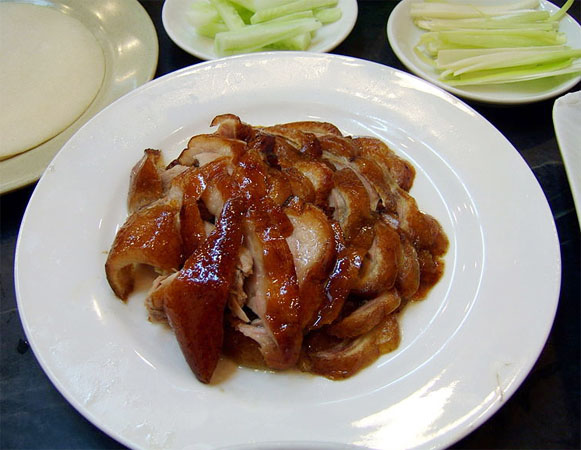
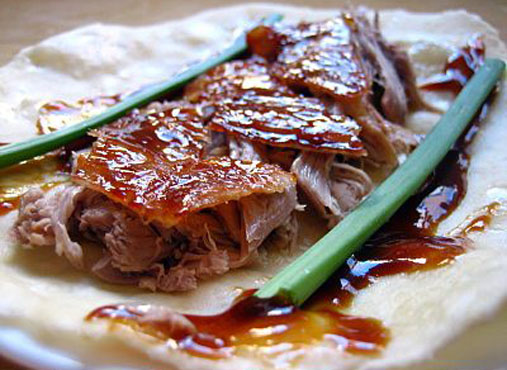
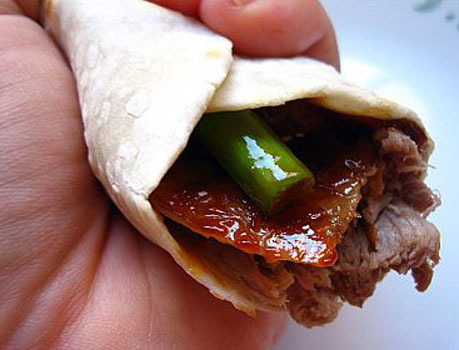
烤制完成的鴨子用刀削成小片,叫做「片鴨」,配以大蔥絲、黃瓜絲、甜麵醬,用薄餅卷著食用。剔除鴨肉後剩餘的鴨架可以用來煲湯。

Peking Duck is a famous duck dish from Beijing that has been prepared since the imperial era, and is now considered one of China's national foods. The dish is prized for the thin, crisp skin, with authentic versions of the dish serving mostly the skin and little meat, sliced in front of the diners by the cook. Ducks bred specially for the dish are slaughtered after 65 days and seasoned before being roasted in a closed or hung oven. The meat is eaten with pancakes, scallion, and hoisin sauce or sweet bean sauce. 
   Fattened ducks are slaughtered, plucked, eviscerated and rinsed thoroughly with water. Air is pumped under the skin through the neck cavity to separate the skin from the fat. The duck is then soaked in boiling water for a short while before it is hung up to dry. While it is hung, the duck is glazed with a layer of maltose syrup, and the inside is rinsed once more with water. Having been left to stand for 24 hours, the duck is roasted in an oven until it turns shiny brown.
    Peking Duck is traditionally roasted in either a closed oven or hung oven. The closed oven is built of brick and fitted with metal griddles. The oven is preheated by burning Gaoliang wood at the base. The duck is placed in the oven immediately after the fire burns out, allowing the meat to be slowly cooked through the convection of oven heat.  The hung oven was developed in the imperial kitchens during the Qing Dynasty and adopted by the Quanjude (全聚德) restaurant chain. It is designed to roast up to 20 ducks at the same time with an open fire fuelled by hardwood from peach or pear trees. The ducks are hung on hooks above the fire and roasted at 270 °C (525 °F) for 30–40 minutes.

  Serving -- The cooked Peking Duck is traditionally carved in front of the diners and served in three stages. First, the skin is served dipped in sugar and garlic sauce. The meat is then served with steamed pancakes (春餅), spring onions and sweet bean sauce. Several vegetable dishes are provided to accompany the meat, typically cucumber sticks. The diners spread sauce, and optionally sugar, over the pancake. The pancake is wrapped around the meat with the vegetables and eaten by hand. The remaining fat, meat and bones may be made into a broth, served as is, or the meat chopped up and stir fried with sweet bean sauce. Otherwise, they are packed up to be taken home by the customers
Picture
北京烤鴨 (Peking Duck)
Picture
北京烤鴨 Peking duck carved and served (全聚德)
Picture
全聚德 北京烤鴨 (Serving the Peking Duck)
Picture
Peking duck served (全聚德 北京烤鴨)
Picture
北京烤鴨與春餅等配料 Peking duck wrap
Picture
北京烤鴨春餅捲 Peking duck wrap

第九道菜:炒麵
(No.9 Chow Mein)

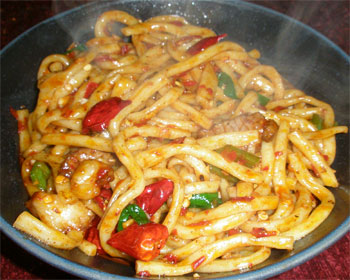
     炒麵遍布中國各地,品種繁多,可以使用各種麵條及其他食材搭配。使用的麵條有米面、寬面、細面、刀削麵、面片、粉絲等。口味以咸為主。炒制時配以醬油,色澤醬黃,有光澤。中國長江以南部分地區加少許黃酒調製,具有香氣四溢之感,如豉油王炒麵、時菜肉片炒麵等。
       炒麵在清朝末期傳入美國,英語詞彙 Chow Mein 即為炒麵,出自台山話發音 chāu-mèing,但ng在英語中演變成n。歐美國家中餐館的「炒麵」比日本炒麵粗,配菜也粗大,油少湯多,也是用碟子裝。另有一道類似的食品「撈麵」(又稱「拌麵」)。此道食物在香港是用湯焯熟廣東蛋麵,不是炒麵,瀝乾湯水後放碟上再撈,如蠔油撈麵、薑蔥撈麵、蝦子撈麵、牛腩撈麵、豬手撈麵、雲吞撈麵、豉油王撈麵、廣東炸醬撈麵等,通常都會有一小碗上湯另上的。撈麵是一種經濟實惠的小吃,一些不重視午餐的美國人常常光顧作為中午的工作餐或晚餐。

    炒麵的做法還真多,不僅可以做成炸醬麵,牛肉麵,還可以炒起來,筋斗的麵條會變的有些焦脆,十分好吃。
Chow mein (炒麵, "fried noodles") is a Chinese term for a dish of stir-fried noodles, of which there are many varieties. In American Chinese cuisine, it is a stir-fried dish consisting of noodles, meat (chicken is most common but pork, beef or shrimp can be used), onions and celery.
      There are two main kinds of chow meins available on the market: 1) Steamed chow mein, and 2) Crispy chow mein, also known as Hong Kong style chow mein. The steamed chow mein has a softer texture, while the latter is crisper and drier. Crispy chow mein uses fried, flat noodles, while soft chow mein uses long, rounded noodles.
       Crispy chow mein has either onions and celery in the finished dish or is served "strained", without any vegetables. Steamed chow mein can have many different kinds of vegetables in the finished dish; most commonly including onions and celery but also sometimes carrots, cabbage and mung bean sprouts as well. Crispy chow mein is usually topped with a thick brown sauce, while steamed chow mein is mixed with soy sauce before being served.
Picture
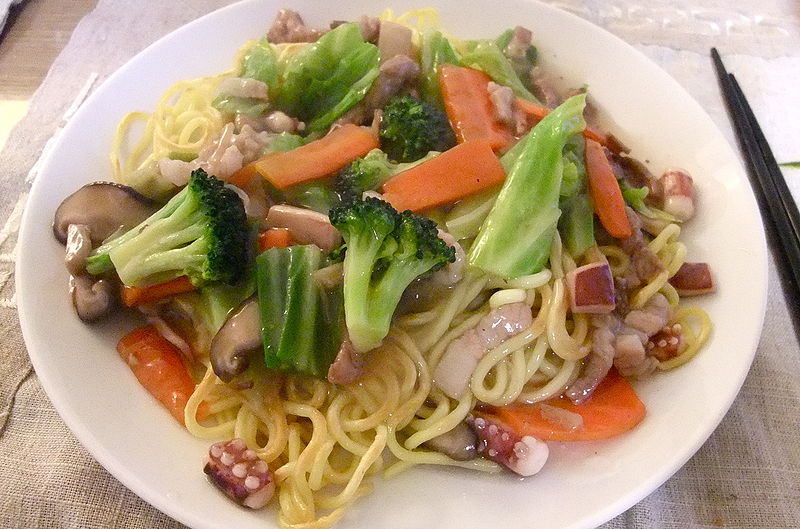
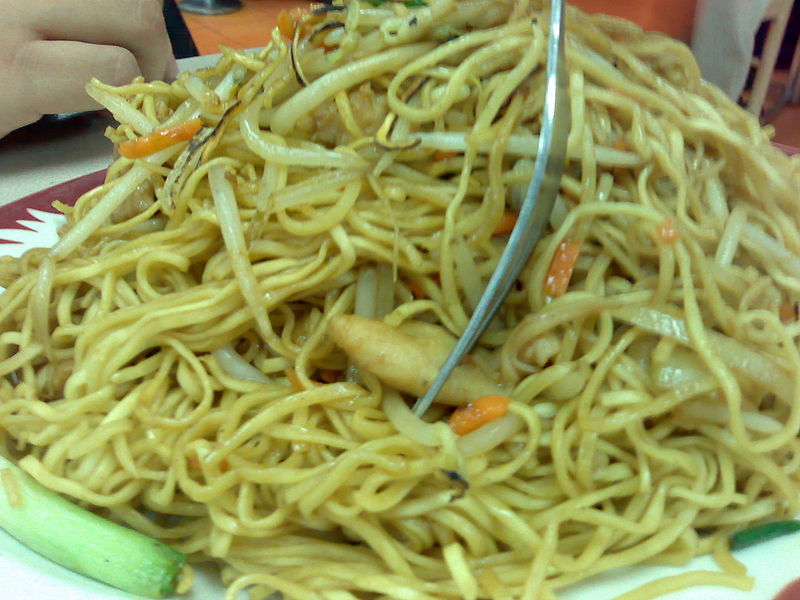
炒麵 Chow Mein
Picture
什錦炒麵
Picture
雞肉炒麵 (Chicken chow mein Vancouver Chicken cube chow mein)

第十道菜:腰果蝦仁  (No.10 Fried Shrimps with Cashewnuts)

    蝦仁營養豐富,肉質鬆軟,與腰果同炒。吃起來蝦仁滑嫩,腰果酥脆。
腰果蝦仁
材料 :蝦仁 300g , 青豆仁 , 腰果
醃蝦料 :塩    蛋白     太白粉或玉米粉
做法 : (1)  蝦仁洗淨,用紙巾吸乾水份備用.
(2) 取一個碗放入蝦仁,塩及蛋白抓拌一下,讓蛋白吸收再加入太白粉或玉米粉拌勻。
(3) 蝦仁入油鍋中過油,撈出瀝油備用。
(4) 鍋中放入青豆仁及蝦仁拌炒均勻,即可盛盤。(蝦仁直接入鍋中炒再加入青豆仁拌勻也可)。
(5)  在盤上灑些腰果即可。
● 蝦仁要用紙巾壓乾水份,炸好或炒好的蝦仁才會爽脆。
Picture
腰果蝦仁
Picture
腰果蝦仁
View My Stats

Powered by Create your own unique website with customizable templates.